10 Essential Tips for Caring for a Puppy Cat
Announcements
Caring for a puppy cat can be one of the most rewarding and challenging experiences in the life of an animal lover.These little cats require attention, affection and specific care to develop healthy and happy.If you have just adopted a cat puppy, it is essential to know the best practices to ensure that he has everything he needs. In this article, as a specialist veterinarian, I will share 10 essential tips for caring for a puppy cat that will help you provide the best start in life for your new friend.
Preparing the Environment for the New Cat
First of all, before bringing a puppy cat home, it is crucial to prepare the environment in a proper way. This means ensuring that the space is safe and comfortable for the puppy. Remove small objects that he can swallow, hide electrical wires and create a space where he can hide and feel safe.In addition, invest in a cozy bed and some toys so that he can entertain himself and feel welcomed.
Announcements
An extra tip is to consider using synthetic pheromones. These products can help reduce the stress of the puppy when adapting to the new home, providing a more peaceful and cozy environment.Also place scratching posts in strategic places so that he can exercise and wear his nails, avoiding damage to furniture.
Nutrition Suitable for Cat Puppies
Nutrition is one of the most important aspects in the care of a puppy cat. Therefore, offer a high-quality feed specific for puppies, rich in proteins and nutrients essential for growth.Do not hesitate to consult your veterinarian for recommendations on the best brands and types of feed. In addition, always keep fresh and clean water available for your puppy.
Announcements
Puppies have high energy needs, and food should be fractioned into several small meals throughout the day. This helps maintain constant energy levels and promotes healthy growth. Avoid offering food for human consumption, as many can be toxic to cats, such as chocolate, onion and garlic.
Veterinary Visits and Vaccinations
As soon as you adopt a cat puppy, schedule a visit to the vet.The first appointments are essential to ensure that your puppy is healthy and to start the vaccination schedule.Vaccines are vital to protect your cat from serious diseases.In addition, your veterinarian can advise on deworming and other necessary preventive care.
Worming is especially important in the first months of life, as puppies are highly susceptible to intestinal parasites.Your veterinarian will prescribe a proper protocol to ensure the elimination of worms and prevent reinfestations.In addition, the veterinarian can discuss the importance of routine examinations and how to monitor the health of your puppy over time.
Initial Socialization and Training
Socialization is a critical aspect in the development of a puppy cat.From an early age, expose him to different people, sounds and environments so that he becomes a confident and sociable cat. In addition, start the initial training with the litter box and, if possible, teach basic commands. Patience and consistency are key during this phase.
During socialization, it is important to introduce the puppy to other people and, if possible, to other pets in a controlled and positive manner. This will help reduce fear and anxiety in the future.Play with him regularly to stimulate mental and physical development, and use positive reinforcements, such as snacks and praise, to encourage desirable behaviors.
Importance of Play and Physical Activity
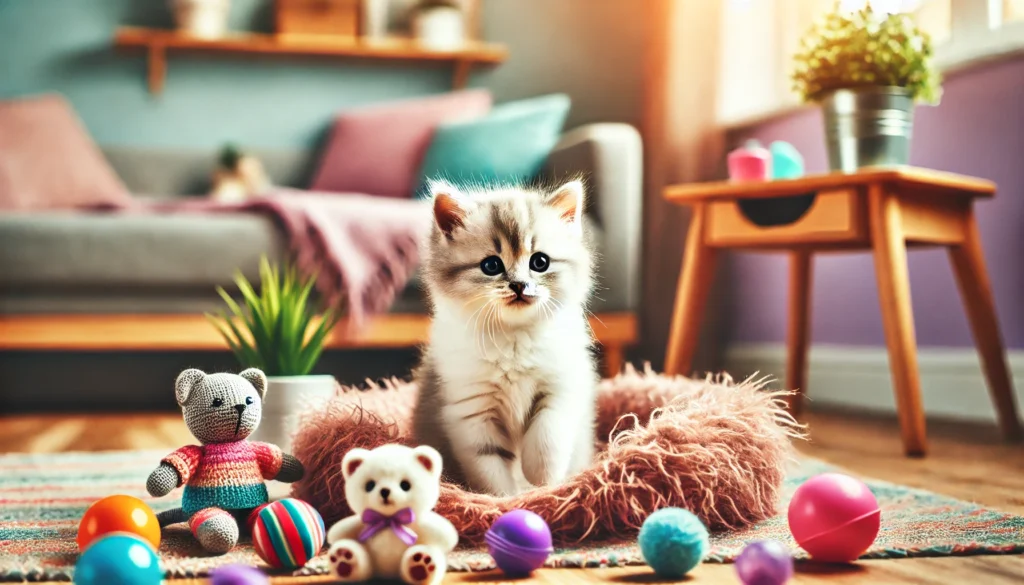
Cat puppies have a lot of energy and need activities to develop physically and mentally. Therefore, invest in interactive toys that stimulate hunting and exploration. Playing regularly with your puppy not only helps to expend energy, but also strengthens the bond between you.
Toys such as wands with feathers, balls and tunnels are great for encouraging physical activity.In addition, intelligence games, which challenge the puppy to solve problems to earn rewards, are excellent for stimulating the developing brain of your kitten.
Hygiene and Hair Care
Maintaining your puppy’s hygiene is crucial for his health and well-being. Brush the hair regularly to avoid the formation of knots and hairballs.In addition, introduce tooth brushing from an early age to prevent future problems. Baths are not often necessary, but if necessary, use specific products for cats.
Cat pups are naturally curious and can get dirty easily. Although cats are very clean and groom themselves, an occasional bath may be necessary. Always use suitable products and avoid excessive head wetting. Regular cleaning of the ears and cutting of the nails are equally important to maintain the general hygiene of your puppy.
Adaptation to the Use of Sand Box
Teaching your puppy to use the litter box is an important part of training. Put the litter box in a quiet place and show the puppy where it is. Initially, it may be necessary to put the puppy in the litter box a few times so that he understands its purpose. Keep the litter box always clean to encourage regular use.
The choice of sand is also a crucial factor. Some cats prefer fine-textured sands, while others can better adapt to grainy options.Try different types of sand until you find the one your puppy likes best. Remember to clean the box daily to avoid odors and maintain a pleasant environment for the cat.
Common Disease Recognition and Prevention
Cat pups are susceptible to various diseases, so be on the lookout for signs of health problems.Loss of appetite, lethargy and changes in behavior are indicative that something may be wrong.
In addition to vaccines, disease prevention also involves keeping the environment clean and avoiding contact with unknown animals that can transmit infections.Vaccination against diseases such as panleukopenia, rhinotracheitis and calicivirus is essential to protect the health of your puppy. Early castration can also prevent behavioral problems and some diseases.
Importance of Microchip and Identification
Consider the microchip is an important safety measure for your puppy.In case he gets lost, microchip identification can help bring him back home.In addition, a collar with an identification tag can be useful, but make sure that it is safe and comfortable for the puppy.
The microchip is a permanent form of identification that can not be lost, like collars.It is a quick and simple procedure performed by the veterinarian.In addition, keep your contact details updated in the microchip record to ensure that you can be found in case your cat gets lost.
Preparation for the Adult Phase
Finally, preparing for your cat’s adulthood is essential.This includes considering neutering or sterilization, which can prevent unwanted behaviors and health problems. Continuing to offer a balanced diet, provide stimuli and ensure regular visits to the veterinarian are practices that should be maintained throughout your cat’s life.
The transition from puppy to adult feeding should be done gradually to avoid digestive problems. Continue to encourage physical activity and environmental enrichment to keep your cat healthy and happy. Regular veterinary consultations are key to monitoring the health of your cat and preventing possible problems.
Conclusion
Caring for a puppy cat is a journey filled with moments of tenderness and learning. With the essential tips mentioned in this article, you will be well prepared to offer the best possible care to your new feline friend. Remember, each puppy is unique and may require specific care, but with love, attention and dedication, you will be on the right track to create a healthy and happy cat.