How to Teach Your Dog to Sit: Complete Step by Step.
Announcements
Training your dog to obey the “sentar” command is essential for a harmonious and controlled coexistence.This command is not just a trick, but one of the fundamental pillars of good canine behavior.
Proper training can prevent many behavioral problems and facilitate daily interaction with your dog. Therefore, if you are ready to venture into the world of dressage, follow this complete guide that we have prepared for you.
Announcements
Why Is Teaching Your Dog to Sit Important?
Teaching your dog to sit is crucial for several reasons.Firstly, this command is a solid basis for other desirable trainings and behaviors. When your dog knows how to sit, you have more control in situations such as visits from friends, walks, and even at mealtime.Moreover, a dog that knows how to sit is less likely to jump on people, run towards traffic or behave in an undisciplined manner.Therefore, the “sentAR COMMAND not only facilitates the life of the owner, but also promotes the safety and well-being of the animal.
Preparing for Training
Before starting training, it is vital that you prepare properly. Choose a quiet, distraction-free place where your dog can concentrate.Have high-quality snacks handy, small enough to be consumed quickly.In addition, use a guide and a leash to help guide your dog in the first steps. In this way, you ensure that the environment and tools are in your favor, increasing the chances of success.
Announcements
First Steps of Training
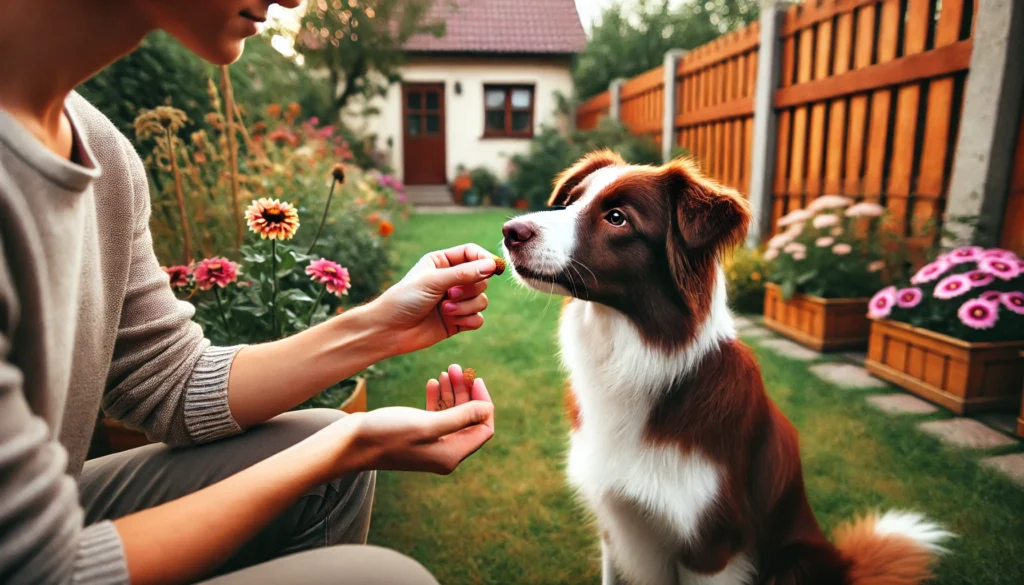
To begin with, keep your dog standing and hold a treat close to his nose. Slowly move the treat up and back towards the tail. This action should encourage your dog to follow the treat with his nose, naturally resulting in the movement of sitting. As soon as he sits down, say “senta” and deliver the treat immediately, followed by many compliments. This first step is crucial as it establishes the association between verbal command, gesture and reward.
Repetition and Consistency
The key to success in dog training is repetition. Practice exercise several times a day, but keep sessions short to prevent your dog from getting bored or frustrated. Consistency in using the command word and delivering the treat is essential for your dog to associate sitting with verbal command and reward. So be patient and persistent, because consistency is the foundation of learning.
Introducing Verbal Command
After a few repetitions, your dog will begin to associate the movement of the hand with the act of sitting. At this point, it is time to introduce the verbal command. Say “senta” clearly before moving the snack.Over time, your dog will begin to associate the word with the behavior and sit without the need for the snack as a guide. Continue rewarding your dog every time he obeys the command to reinforce the positive association.
Training in Different Environments
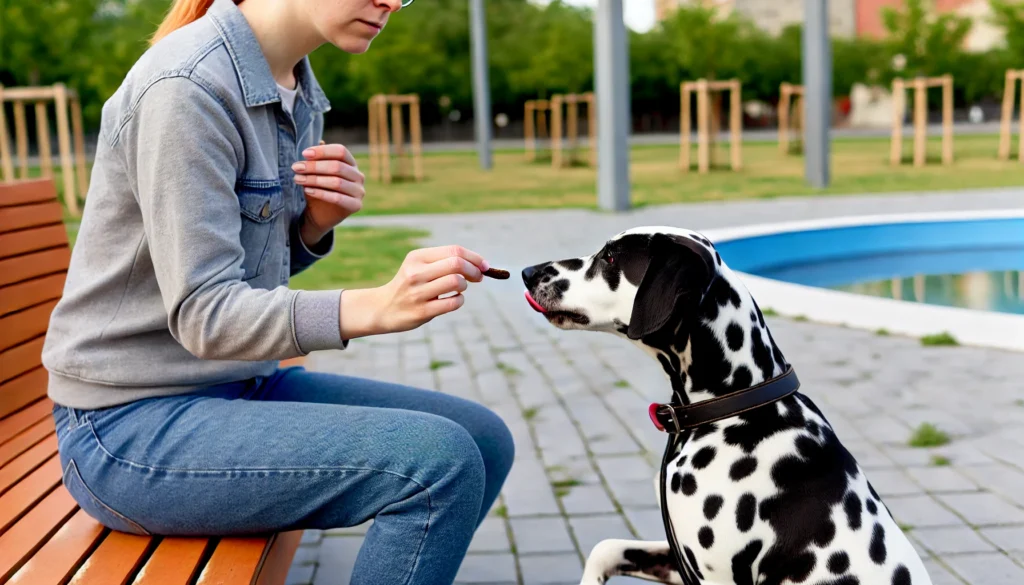
Once your dog is consistently responding to the “senta” command in a quiet environment, it's time to increase the difficulty.Start practicing the command in different locations and situations, such as in the park, during walks or when there are visits at home. This will help your dog generalize the command and obey even with distractions.Variating the training environment is critical to ensure that your dog responds to the command in any situation.
Visual and Signal Signs
In addition to verbal command, many dogs respond well to visual cues. Use a specific gesture, such as raising your hand with your palm facing up, while saying “senta”, your dog will be able to respond to the gesture even without verbal command.This technique is especially useful in situations where the environment is noisy or your dog is distant. Incorporating visual cues into training can increase your dog's effectiveness and obedience.
Maintaining Patience and Persistence
Dog training requires patience and persistence.Each dog is unique and can learn at different paces.It is important not to be frustrated if your dog does not learn immediately. Keep practicing and reinforcing positive behavior. Remember that training should be a pleasant experience for both you and your dog. Patience is an essential virtue in the training process.
Correcting Unwanted Behaviors
If your dog does not respond to the command or begins to exhibit unwanted behaviors during training, such as barking or jumping, it is important to correct it in a gentle and immediate manner. Use a firm but gentle tone to redirect his attention and restart the command. Avoid yelling or punishing your dog, as this can cause fear and distrust. A proper correction helps to keep your dog's focus on training.
Involving the Family in Training
Including all family members in the training process is critical to ensure consistency.Each person should use the same verbal and gestural command to avoid confusion.In addition, this reinforces the dog's respect and obedience to all members of the house.The involvement of the whole family in training creates a cohesive and harmonious environment for the dog.
Using Training Tools
There are several training tools that can be useful, such as clickers, which emit a specific sound when pressed, helping to reinforce the desired behavior. The clicker is especially effective when used along with snacks, as the sound becomes a clear marker for the dog to associate with the correct behavior. Proper training tools can accelerate the learning process of your dog.
Maintaining Consistent Training
Keeping training consistent is the key to long-term success. Keep practicing the “senta” command regularly, even after your dog has learned.This not only reinforces the behavior, but also keeps your dog mentally stimulated. Consistency in training is vital to maintaining good habits.
How to Deal with Common Challenges
During training, you may encounter some challenges. More stubborn or anxious dogs may need more time and patience.If your dog has difficulty learning, consider reducing distractions, using more attractive treats, or consulting a professional trainer for additional guidance. Adapting training to your dog's specific needs may be necessary to overcome obstacles.
Long-Term Benefits of Training
Teaching your dog to sit not only facilitates daily living, but also contributes to the mental and physical health of your pet. Trained dogs tend to be happier and safer, as they understand what is expected of them. In addition, continuous training strengthens the bond between you and your dog, creating a relationship of trust and mutual respect. The long-term benefits of training are invaluable for the life of your dog.
FAQs
How can I start training my dog to sit?
A: Start in a quiet environment, using treats as motivation. Move the treat from the nose up and back until the dog feels it, then reward it.
How long does it take for a dog to learn how to sit?
A: Time varies, but with consistency and repetition, many dogs learn the “senta” command in a few weeks.
Can I train my dog without snacks?
A: Yes, although snacks are effective, you can also use praise and affection as rewards.
What to do if my dog does not respond to the command?
A: Be patient and consistent. Reduce distractions and use more appealing snacks. If necessary, seek the help of a professional trainer.
When should I start training my dog?
A: The earlier the better. Puppies can start learning basic commands from the age of two months.
Can I use the “senta” command in specific situations?
Yes,“senta” is useful in many situations, such as during meals, when greeting people, or to maintain control in public areas.
Conclusion
Teaching your dog to sit is one of the best ways to ensure a harmonious and happy coexistence.With patience, consistency and lots of love, you will see your dog respond to the command in a positive and confident way.
Training is a journey that strengthens the bond between you and your pet, making each moment together even more special.In addition, using tools such as clickers and involving the whole family in the training process are strategies that can facilitate learning and improve the response of the dog.