The Complete Guide to Dog Puppy Training
Announcements
Training a puppy is one of the most rewarding and at the same time challenging steps in life with a pet. From the moment you take your new friend home, every interaction is an opportunity for teaching and bonding. As a specialist veterinarian, I am here to share a complete guide on how to train your puppy efficiently, ensuring that he grows up to become a happy and well-behaved companion.
First Steps in Training
Training a puppy should begin as soon as he gets home. The first essential step is socialization.Expose your puppy to different people, places, sounds and other animals in a positive way.Early socialization helps prevent fearful or aggressive behaviors in the future.
Announcements
Also, introduce basic commands from an early age, such as “sit”, “stay” and “come”. Always use positive reinforcement, rewarding the puppy with snacks, caresses or toys when he responds correctly. Remember that patience is key; puppies have short attention spans and need short and consistent training.
The Importance of Consistency
Consistency is one of the pillars of canine training.All family members should be aligned in the commands and rules established for the puppy. For example, if the command to sit is “sit”, everyone should use the same word and not variations such as “sit” or “sit”.
Announcements
Feeding, walking and training should take place at approximately the same times each day.Predictability helps the puppy understand what is expected of him and feel more secure and confident.
Bathroom Training
One of the most common challenges for new puppy owners is toilet training.Start by establishing a specific area for the puppy’s needs. Take him to that area often, especially after meals, play and naps. Praise and reward correct behavior immediately after it happens. If accidents occur indoors, clean the area thoroughly to remove any smell that might attract the puppy back to the spot.
To facilitate, use transport boxes or fences to limit the access of the puppy to unwanted areas. Puppies tend to avoid making their needs close to where they sleep, which helps in control.
Collar Training and Guide
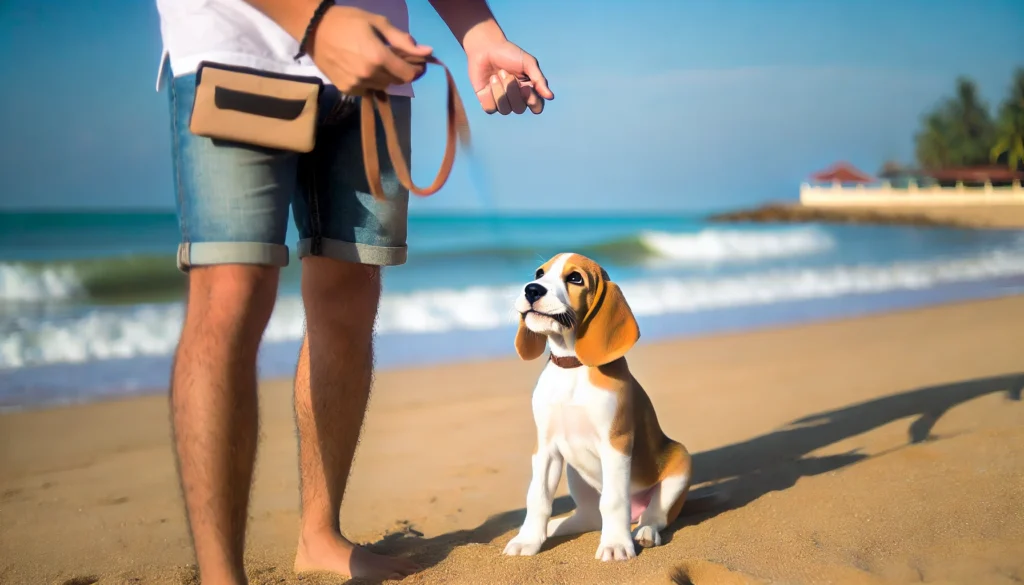
Introduce the collar and the guide should be done gradually and positively. Start by letting the puppy wear the leash indoors so that he gets used to the feeling. Then, attach the guide and allow him to drag it around the house under your supervision. Reward the puppy for remaining calm and relaxed with the leash and the guide.
When going out for a walk, keep the walks short and let the puppy explore. If he pulls the tab, stop and wait until the tension subsides before continuing. This teaches the puppy that pulling will not get him anywhere.
Advanced Commands and Tricks
As your puppy masters the basic commands, you can introduce more advanced commands and fun tricks. Commands like “lay down”, “roll” and “bring” not only keep the dog mentally stimulated, but also strengthen the bond between you.
Solving Common Behavior Problems
During training, it is natural for some unwanted behaviors to arise. Excessive chewing, inappropriate barking and jumping can be corrected with patience and appropriate techniques.
For chewing, provide suitable and safe toys for the puppy and redirect him when he chews on something inappropriate. Praise him when he chews the correct toys.
For barking, identify the cause and work to remove it or desensitize the puppy to the stimulus. Teaching the “quiet” command can be helpful, rewarding the puppy for remaining silent when asked.
For jumping, ignore the behavior and only pay attention to the puppy when he has all four legs on the ground. Reward him with affection and praise when he behaves properly.
Positive Reinforcement Tips
Positive reinforcement is a powerful technique and should be used consistently during training. Rewarding good behavior with treats, toys or compliments helps the puppy associate correct actions with pleasant consequences.However, it is crucial not to overdo the snacks to avoid health problems.
Attention to Body Language
Understanding your puppy’s body language is essential for effective training.Watch signs of stress, such as yawning, lip licking, or avoiding eye contact, and adjust training as needed. If the puppy seems overwhelmed, take a break and resume later.
Using Clicker in Training
The use of a clicker can be a valuable tool in puppy training. A clicker is a small device that emits a distinct sound when pressed. Whenever the puppy performs the desired behavior, click and then offer a reward. This technique helps to mark the correct behavior clearly and quickly, facilitating learning.
Integrating Training Day by Day
Integrating commands and training practices throughout the day makes the process more natural and effective.For example, ask the puppy to sit before receiving the meal or before opening the door for a walk.
Group Obedience Training
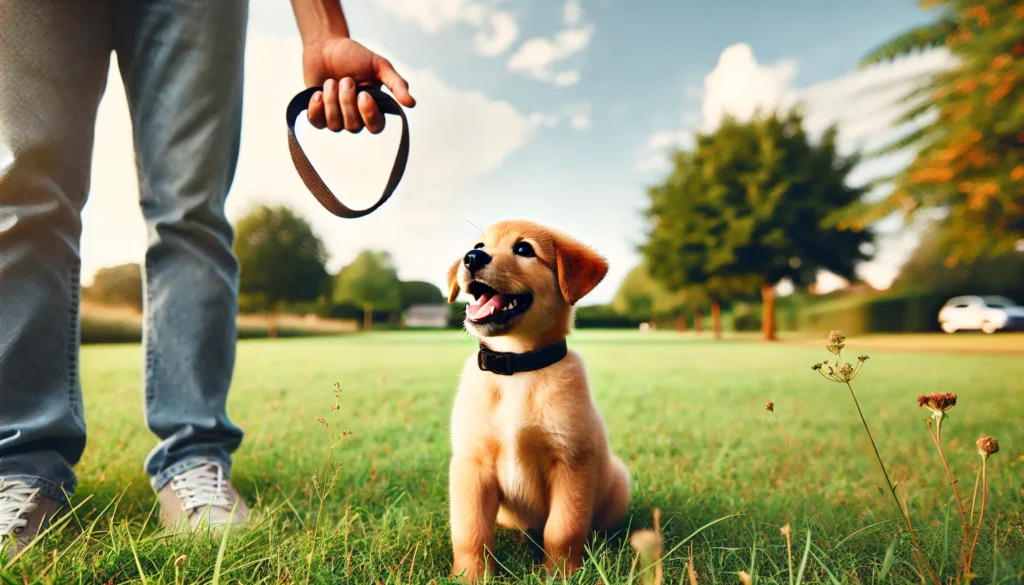
Participating in group obedience classes can be beneficial for the puppy. In addition to learning new commands, the puppy socializes with other dogs and people, which is crucial for their development. Choose a reputable training school that uses methods based on positive reinforcement.
Maintaining Motivation
Keeping your puppy’s motivation high is critical to successful training.Vary the rewards and types of training to avoid monotony.Short, fun sessions are more effective than long periods of training. If your puppy seems disinterested or tired, take a break and resume when he is most receptive.
Training with Focus on Solutions
Specific behavior problems, such as separation anxiety or fear of loud noises, can be addressed with specific training techniques.Working with a professional trainer can be helpful in these cases.Methods such as desensitization and counter-conditioning can help reduce anxiety and fear of the puppy.
Conclusion
Training a puppy is a commitment that requires time, patience and consistency, but the results are worth it. A well-trained dog is not only happier and healthier, but also brings immense joy and companionship to the family.Use applications such as “Pupford” and “GoodPup” for additional support and training ideas.They offer training videos, personalized guidance and a supportive community that can be extremely helpful.
Remember that each puppy is unique and can learn at their own pace. Stay positive, celebrate progress and enjoy every moment of this amazing process of learning and growth together.