The World's Most Fascinating Amphibians: Curiosities and Care
Announcements
When we think of wild and exotic animals, amphibians are rarely the first to come to mind. However, these amazing vertebrates possess characteristics and behaviors that are truly fascinating. As an expert veterinarian, I invite you to embark with me on a journey through the world of amphibians, discovering their peculiarities and learning how to care for these extraordinary creatures.
The Diversity of Amphibians
Amphibians are a diverse group of vertebrates that includes frogs, frogs, salamanders and caecilians.There are more than 7,000 known species, scattered throughout all continents except Antarctica. This group of animals is notable for their ability to live both in water and on land, an adaptation that has allowed their survival for millions of years.In addition, many of these animals possess unique characteristics that make them especially interesting for scientists and nature lovers.
Announcements
Curiosities About Amphibians
- Metamorphosis: One of the most striking features of amphibians is metamorphosis. Most amphibians begin life as aquatic larvae (tadpoles in the case of frogs and frogs) before they transform into terrestrial adults. This process involves impressive changes in body shape and function. In particular, frogs undergo a transformation from tadpole to adult that includes the development of legs and the loss of the tail.
- Permeable Skin: The skin of amphibians is extremely permeable, allowing gas exchange and water absorption directly from the environment. This feature makes them very sensitive to environmental changes, which makes them excellent indicators of ecological health. For example, the presence or absence of certain species of amphibians may indicate the quality of water and air in a given area.
- Poisons and Toxins: Many amphibian species, such as the Central and South American poison dart frogs, produce potent toxins. These poisons are used for both predator defense and hunting.The toxins produced by some frogs are so powerful that they can be fatal to humans and other animals.On the other hand, some of these toxins have potential for medicinal uses, including treating chronic pain.
Notable Amphibians and Their Characteristics
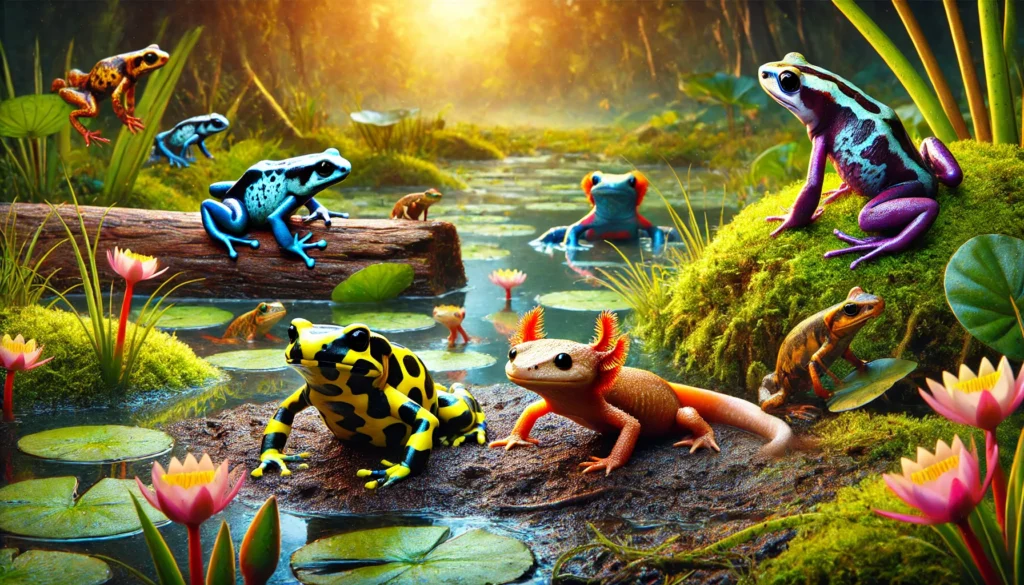
- Poison dart frog (Dendrobatidae): Known for their vibrant colors and potent poisons, these frogs are an excellent example of evolutionary adaptation. Their venom is used by indigenous tribes to poison the tips of hunting arrows.In addition, their bright colors serve as a warning to predators of their toxicity.
- Axolote (Ambystoma mexicanum): Also known as “water monster”, the axolotl is famous for its regenerative ability.This neothenic amphibian retains larval features in adulthood, including external gills, and is an important model for scientific research. Interestingly, the axolotl can regenerate limbs, tail, heart and even parts of the brain, making it a focus of study for regenerative medicine.
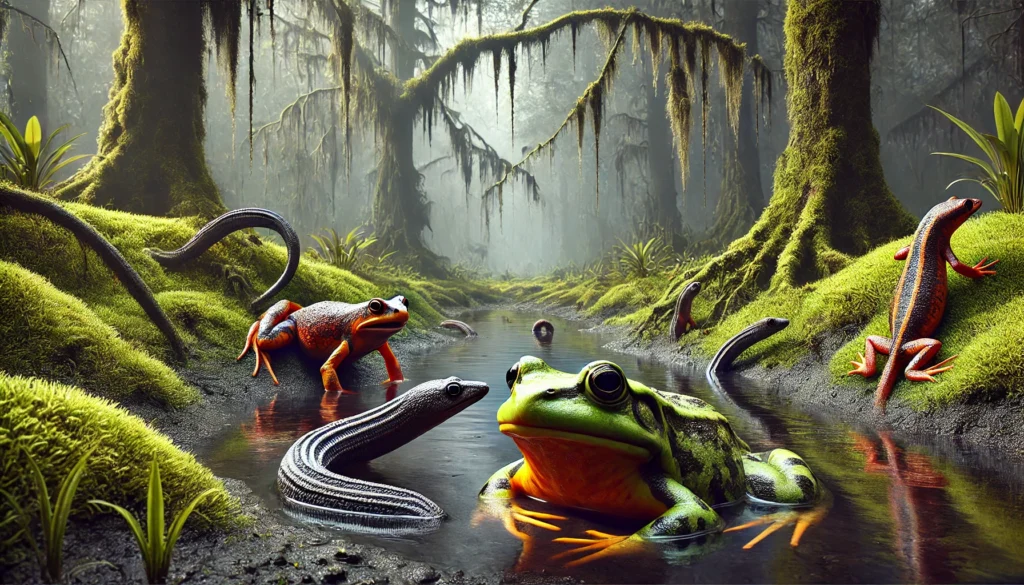
- China giant salamander (Andrias davidianus): This is the largest amphibian in the world, reaching up to 1.8 meters in length. Unfortunately, it is critically endangered due to habitat loss and poaching. The Chinese giant salamander has a rough skin and a robust body, adapted to live in rivers and mountain streams.
- Glass frog (Centrolenidae): These small frogs are notable for their translucent skin, which allows them to see their internal organs, including the beating heart. Glass frogs are found mainly in Central and South America, in humid tropical forests. They usually live on the leaves of trees over streams, where their eggs hatch directly into tadpoles that fall into the water below.
Essential Care for Amphibians
Caring for an amphibian as a pet can be an incredibly rewarding experience, but it requires attention to specific details to ensure its well-being.The following are some essential care:
- Appropriate Habitat: The environment should mimic the natural habitat of the amphibian as much as possible. This includes temperature control, humidity and the presence of clean water. For example, arboreal frogs require vertical environments with many plants, while aquatic salamanders need submerged areas and land.
- Feeding: The diet of an amphibian varies according to the species. Generally, they feed on insects, small invertebrates and in some cases small vertebrates. It is important to provide a balanced diet rich in nutrients. For frogs and frogs, crickets and earthworms are often offered, while salamanders may prefer insect larvae and small fish.
- Hygiene & Health: Due to permeable skin, amphibians are susceptible to skin infections and parasites. Keeping the habitat clean and regularly monitoring the health of the animal is crucial.In addition, water should be regularly filtered and changed to prevent the accumulation of bacteria and fungi.
- Limited Interaction: Although they can be fascinating to observe, handling should be minimal. The skin of amphibians can be easily damaged, and the oils and chemicals of human hands can be harmful. Whenever it is necessary to handle an amphibian, make sure that your hands are clean and moist to minimize stress and possible damage to the animal.
Education & Conservation
In addition to the personal pleasure of caring for an amphibian, there is also an important educational and conservationist aspect.Many amphibian species are threatened with extinction due to habitat destruction, pollution and diseases such as chytridiomycosis.By learning about these animals and their needs, we can contribute to conservation efforts and educate others about the importance of protecting these species.
Announcements
Conservation Initiatives
Organizations around the world are working hard to protect amphibians and their habitats.Captive breeding programs, such as those developed for the axolotl and the Chinese giant salamander, aim to increase populations at risk and reintroduce them into protected natural environments.In addition, environmental education campaigns seek to increase public awareness of the importance of amphibians in maintaining ecosystem health.
Fascination and Responsibility
Adopting an amphibian as a pet is a decision that must be taken responsibly. These animals, although less conventional, offer a unique window into the biodiversity and complexity of life. Furthermore, when caring for an amphibian, we contribute to the preservation of these remarkable species, many of which face significant threats in nature. It is essential that potential owners do detailed research on the species they wish to adopt, understanding their specific needs and committing to providing appropriate care.
Conclusion
Amphibians are true wonders of nature, with unique adaptations and fascinating life stories.From the poisonous dart frogs with their bright colors and deadly poisons to the axolots with their impressive regenerative capabilities, these animals show us the incredible diversity and resilience of life. Caring for a pet amphibian requires attention and dedication, but the reward of observing its unique interactions and behaviors is worth every effort.
As we explore and learn more about amphibians, we not only broaden our knowledge of wildlife, but also reinforce the importance of preserving these amazing animals and their habitats.The responsibility of caring for an amphibian is therefore not only a matter of personal pleasure, but also a commitment to biodiversity conservation.Whether you are a long-time enthusiast or someone who is just beginning to take an interest in these animals, there is always something new and fascinating to discover in the amphibian world.